

Minecraft Villager Trading Guide
When I first played Minecraft, villagers were the last thing I ever paid any attention to. If I discovered a village, I would get some food, and if it was night, I would sleep in a bed and keep on looking. The trading seemed slow and a little complex, so I thought mining was the sure-fire way to go. It just felt a lot more fulfilling to spend your time underground looking for diamonds than it was to stand around bartering crops or paper for emeralds.
That happened when I was playing one of my survival worlds and my mining luck totally disappeared. I kept going on these extended journeys underground and still did not have enough gems to improve my equipment. I exchanged some surplus wheat with a nearby farmer for the first few emeralds I’d ever seen. Before long, I found a fletcher would buy sticks and a librarian might sell magical books. I’d soon have better equipment than I could have gotten from mining alone.
It’s one of the first things I build in every survival world since then. If you’ve never really gotten into villager trade, you’re losing out on one of the most consistent progression systems in Minecraft. This article describes how villager trade works, which professions are worth doing, and how to make emeralds without spending hours grinding for resources.
Why Villager Trading Is Worthwhile
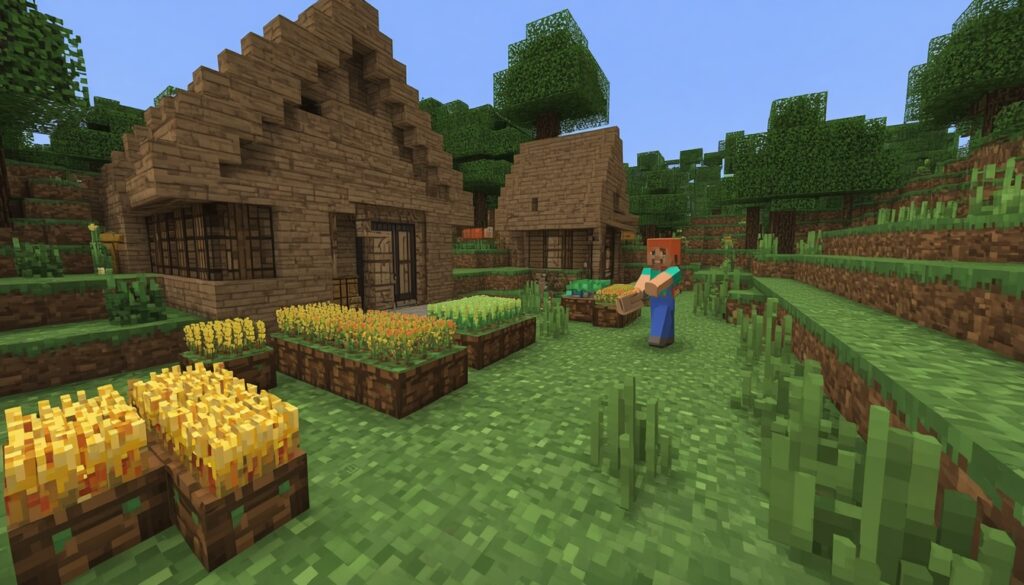
New gamers often disregard villagers, as the benefits they offer don’t seem that impressive at first glance. Trading wheat or sticks for emeralds is not as fun as finding gems or discovering an ancient city. But the real worth is in what you can buy with those emeralds. You can get enchanted books, diamond armor, powerful tools, arrows, food, and other valuable items without luck if you have enough emeralds.
Rather than wishing for the ideal enchantment at an enchanting table, you can just buy it from the correct villager. That’s what makes trading so valuable in the realm of long-term survival. Another positive is consistency. Crops, wood, and sugarcane are renewable resources, which means you will be able to earn emeralds forever. You don’t have to rely on random chance to progress like you do in mining.
How Villager Trading Works
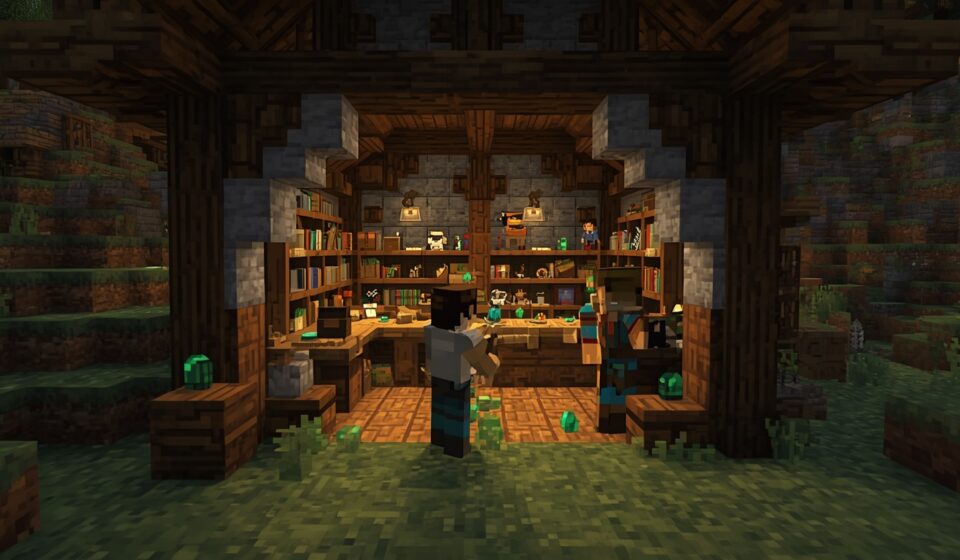
Villager commerce is based on vocations, and each profession is tied to a distinct workstation block. If a villager that is unemployed finds a workstation nearby, it automatically adopts that occupation and begins offering trades linked to it. For example, a lectern becomes a librarian, and a composter becomes a farmer in the Minecraft villager guide.
A fletching table will transform a villager into a fletcher, while a blast furnace will change an armorer. Different professions have different things. So some villagers are far more valuable than others.
What many newcomers don’t realize is that villagers only keep their occupation permanently until you’ve conducted at least one deal with them. Until then breaking the workstation resets their profession. This concept is very beneficial when looking for uncommon librarian trades such as mending, as you are able to continuously swap the lectern until the enchantment shows up.
Top Jobs for Villagers
Not all villager jobs are equally useful. All jobs have their purpose, but some make it a whole lot simpler to survive. ## The librarian The best villager in Minecraft is generally believed to be the librarian. Enchanted books (Mending, Fortune III, Silk Touch, Efficiency V, Protection IV). Librarians are a must-have for nearly all survival players, as they let you buy these enchantments directly, rather than relying on the random luck of the enchanting table.
Agriculture
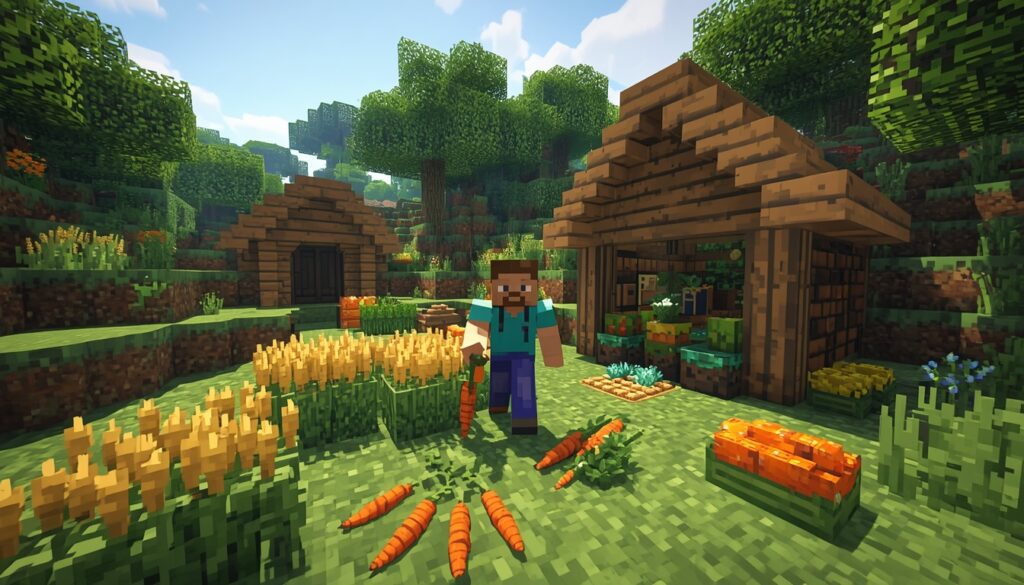
Farmers are one of the easiest ways to get emeralds. And you will already be raising crops for food, so selling excess wheat, carrots, potatoes, pumpkins, or melons is a continuous source of revenue. The more farms you have, the more emeralds you get.
Fletcher, the flitch is good for early-game trade. Logs are abundant, and it is not a great deal of work to transform logs into sticks. Trading piles of sticks for emeralds is one of the fastest methods to get your emerald supply rolling without making complex farms.
The armorer’s. Armors are handy once you have enough emeralds. You no longer need to build all your diamond armor; you can just buy the good stuff straight from the villager. So here are precious jewels for other ventures.
Tips to Enhance Trading
One of the best strategies for trading is to lock in good trades as soon as you locate them. If you come across something like Mending or Fortune III, make sure you use at least one trade immediately. That means the villager will stay in that job forever. Another crucial concern is the safety of villagers. A single zombie may wipe out hours of progress, so keep your trading area fenced in and properly illuminated. Many players lost precious villagers because they did not protect them well enough.
Also, villagers need access to their workstations during the day to refill trades. If trades aren’t refreshing, then usually the first step in fixing the issue is to examine the workstation. This also can make trading much easier later in the game by sorting villagers by profession. Separating librarians, farmers, and armorers saves time looking for certain trades.
Common Mistakes That Players Make
One of the most typical mistakes is to break the workstations too early. Many gamers locate a decent transaction but neglect to lock it in and accidentally reset it by removing the workstation. Always make one trade before you modify anything. Another mistake is to disregard illumination. Villagers are utterly defenseless, and if your region is dark, mobs can readily spawn. Good lighting avoids avoidable losses.
Some gamers don’t even bother with simple emerald farms like sticks and crops, the easiest ways to start. Without a consistent supply of emeralds, trading is slow and frustrating. Finally, many novice traders try to establish overly complex trading rooms at too early a stage. For starters, a basic setup will be sufficient, and you may always upgrade it later on.
Final Thoughts
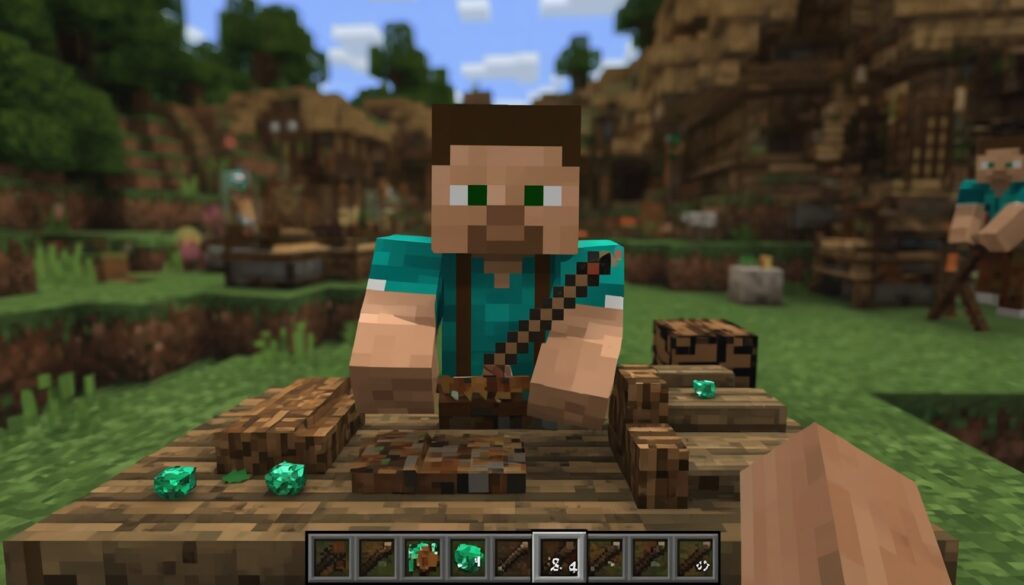
Trading with villagers is a lot more useful once you get into the habit of it. It seems slow and pointless at first, but over time it becomes one of the most stable systems in Minecraft. Emeralds can be used to purchase needed materials instead of hoping to find them. Trading is useful in that it is consistent.
All the resources you accumulate, be they crops, wood, or sugarcane, can be converted into emeralds eventually. This loop helps you to go ahead faster and more reliably, without having to rely on mining luck. Once you have your first little trading system going and get a few important villagers unlocked, it’s hard to go back to playing without them. A simple trading hall can radically modify your survival mode playstyle.
Faqs
What is the best villager for trading in Minecraft?
The librarian is the best villager because it gives powerful enchanted books like Mending, Fortune, and Efficiency.
How do I get emeralds fast from villagers?
The fastest way is trading sticks with a fletcher or crops with a farmer. Both are easy early-game methods.
Why are my villagers not restocking trades?
Villagers need access to their workstations (like lecterns or composters) and time during the day to restock trades.
How do I get mending from a villager?
Use a librarian villager and keep replacing the lectern until Mending appears in the trade list.
Can villagers lose their profession?
Yes, if you break their workstation before locking the trade, they can change or reset their profession.