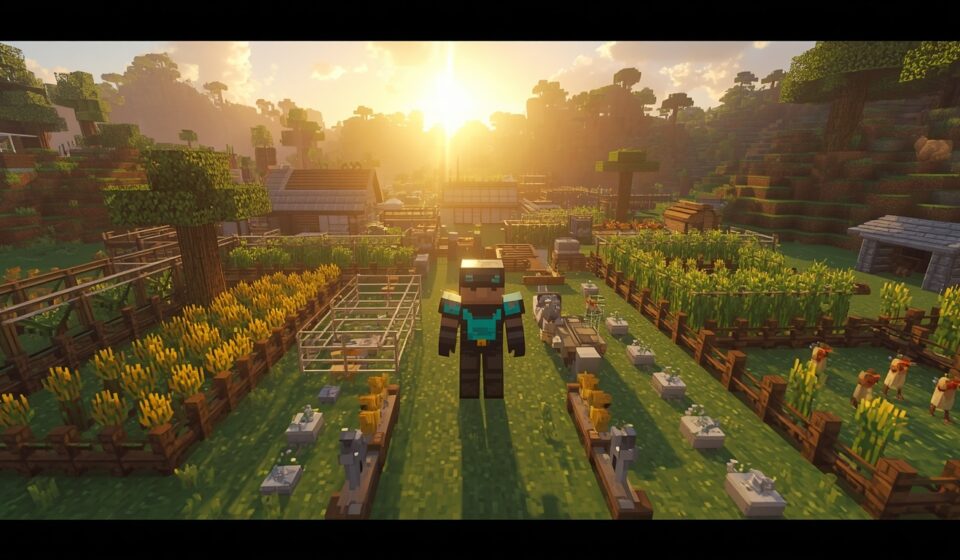

Minecraft farm designs are one of the most significant systems in survival gaming, as it helps the players collect resources in a faster and more effective method. Farms let you to produce resources in an organized, often automated method instead of spending hours mining, farming, or looking for commodities continually. This enables for a smoother, simpler, and more pleasurable survival advancement over time.
Every Minecraft player, sooner or later, learns that farms are a need in long-term survival environments. Whether basic or complex, they aid in managing critical resources and avoid needless grinding. Understanding agricultural designs is not only about creating machinery, it’s about increasing overall efficiency in a survival environment.
What Are Minecraft Farm Designs?
Minecraft farm designs are organized layouts that are built to generate certain resources in the long run. Every farm is constructed with a certain goal in mind – to grow food, to collect materials, to craft experiences. Depending on their sophistication, these systems may be manual or automated.The basic idea behind farm designs is efficiency.
Instead of gathering resources at random, players build systems they control that continually produce the stuff they need. This helps players advance more quickly and ensures a constant flow of vital commodities throughout the game. For official game mechanics and updates, you can also refer to the Minecraft Official Website.
Farms in Survival Mode: Why They Matter
Farms are particularly crucial in survival mode because practically every aspect of the game rely on resources. You need food to survive and heal, wood to build, iron for tools and equipment, and experience points to enchant and upgrade your gear . Without farms, you’re stuck doing the same basic stuff again and over, mining, cutting trees or looking for food most of the time.
That really slows progress. Good Minecraft farm designs tackle this problem by transforming manual labor into mechanical or semi-automatic processes that generate resources constantly. Farms also save players time, let them keep organized and spend more on exploring, building structures and battling creatures instead of grinding for basic materials.
Minecraft Farm Designs for the Early Game
Early on in your survival adventure, basic farms are the most beneficial, as they take less material and are simpler to create. One of the first farms gamers normally make is a wheat farm. It is a reliable food supply and assists in breeding of animals, increasing food output even more. Sugar cane farms are also highly significant in early game as sugar cane can be used to create paper. Books are made of paper and are employed in enchantment systems.
This is a significantly slower path towards enchantment without the sugar cane plantations. Cow farms are another key early game feature as they give you both food and leather. Leather is needed to upgrade enchantment tables, which are made from bookshelves. Chicken farms are also good for producing food continually with relatively little effort. Tree farms round out the early setup, providing a steady supply of wood, which is necessary for nearly every crafting recipe in the game.
Wheat Farming Plan
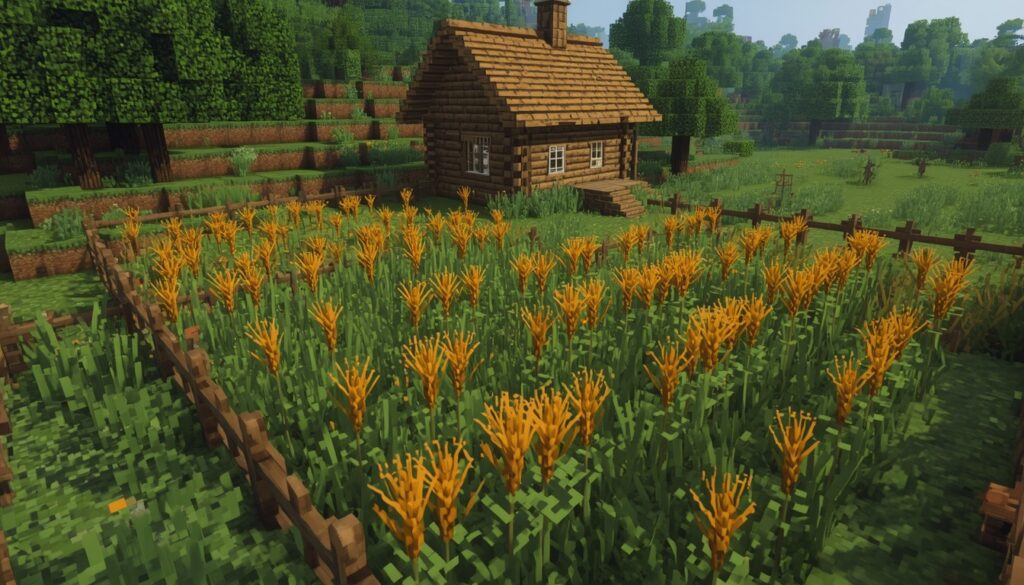
One of the most basic types of farms a player may create in Minecraft is a wheat farm. It consists of a tiny piece of land worked with a hoe, a supply of water near at hand to moisten the soil, and seeds put on the tilled earth. It is a simple farm, but it is still useful throughout the whole game. Wheat offers a reliable food supply, helps with livestock, and gives the villagers with a means of commerce. It is simple and reliable thus many people have a wheat farm in every survival scenario.
Sugar Cane Farm Layout
Sugar cane plantations are easy, yet very useful in Minecraft survival. The fundamental arrangement is to place sugar cane adjacent to water blocks, and let it develop organically over time. When it reaches full height it may be picked and transplanted over and over. This farm is really significant because you need sugar cane to make paper.
Books are made of paper, which is a major material for enchantment systems. In later gaming, sugar cane farms are commonly modified to automated piston based systems to increase production speed.
Animal Farm Artwork
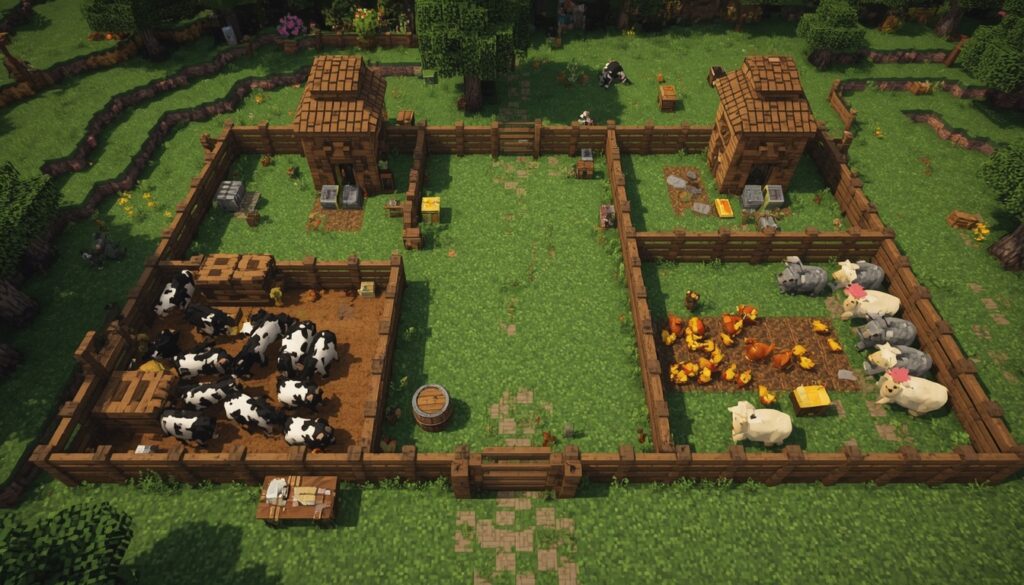
Animal farms are a big feature of survival gaming, providing both food and crafting ingredients. Cow farms are extremely handy, they provide us with steak to eat and leather to build bookcases. Cows are incredibly significant farms since leather is a vital factor in enchantment advancement.
Chicken farms have the advantage of taking up very little area and of producing food continually with very little effort. Space is crucial on animal farms so animals may move and procreate and operate correctly without overpopulation.
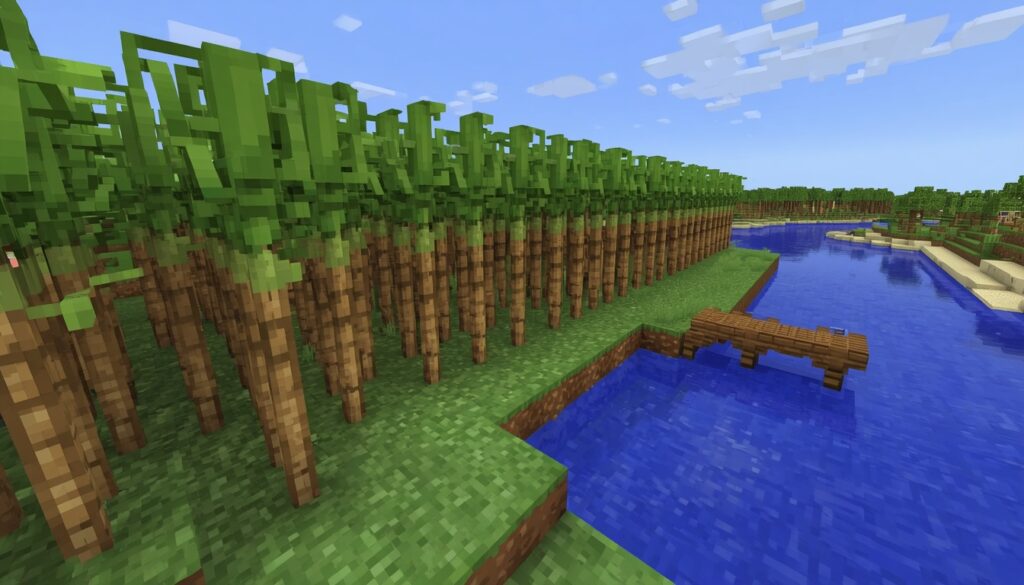
Design Tree Farm
Tree farms are also significant since wood is one of the most popular commodities utilized in Minecraft. It is used for making tools, building buildings and making necessary products. Survival gameplay is sluggish and inefficient without a consistent supply of wood. In a tree farm they sow saplings in a pattern and replant after harvesting. Oak and birch are the most frequent as they are easy to cultivate and manage. This gives you a steady and recurring supply of wood, without having to go out into the forest again and again.
Mid and Late Game Farm Buildings
As the player advances in the game, they will need to implement increasingly sophisticated farm designs to achieve effective survival. Iron farms are one of the most significant systems since iron is needed for tools, hoppers, railroads, and anvils. These farms produce iron automatically without mining, using beds and communities.If you want to understand the mechanics behind different farm types and resource generation, the Minecraft Wiki provides detailed explanations.
Mob farms gather drops from hostile mobs, such as bones, gunpowder, thread, and rotten flesh. These are good for crafting and growth in survival. Bones are especially significant because they may be used to make bone meal which helps speed up agricultural and tree development.
Villager crop farms may be used to automate the growing of crops including carrots, potatoes, wheat and beetroot. These farms decrease physical labour and provide a stable food supply. Honey farms generate honey and honeycomb which can be used for medicinal benefits and beautiful construction reasons.
Automatic and Manual Farms Designs
There are usually two sorts of Minecraft farm designs, automated farms and manual farms. Automatic farms are farms that generate resources without regular player intervention, using redstone systems, villages or game features. The farms are quite efficient but need additional supplies and planning.
Manual farms are less complex and easier to establish, especially early on in survival games. While they do need some player engagement, they are incredibly dependable when resources are tight. Both of these farms are valuable depending on how far along the player is in the game.
Common Errors in Farm Building
Another common error gamers make is developing too many farms at once. This results in half-finished projects and lost resources. The best way is to work on one farm, do it right and then go to the next one. Another typical problem is bad planning. The game has survival gameplay , making it harder , not easier . If not organized well , farms might be fragmented and ineffective .
Final Thoughts
The designs of farms in Minecraft are vital in survival mode, since they steadily make the game easier and more structured. Minecraft first feels tough since every resource takes work but as you create farms your world begins to produce resources on its own and living becomes much easier.
Simple farms like wheat, sugar cane and timber farms may seem little, but they take care of a lot of essential survival issues. Later on, sophisticated farms such as iron, mob, and villager farms go things even farther by offering you infinite resources without the endless grinding. The key thing is not to develop everything rapidly, but to expand step by step.
Instead of confusing or intimidating, your survival environment becomes more secure and fun as you create farms tailored to your requirements. Ultimately, a smart Minecraft farm design is one that makes your gaming easier, saves you time, and fits your personal play style. If you enjoy classic survival gameplay, you may also like our guide on why Minecraft 1.8.8 is still loved by many players, where we explore the version’s timeless mechanics and community appeal.
Faqs
What are farm designs in Minecraft?
In survival mode, players may automatically or manually gather resources like food, wood, iron, and other commodities with the use of organized Minecraft farm designs, which eliminate the need for continual grinding.
What is the finest Minecraft farm to start with?
Wheat farms are often the ideal starting farms since they are simple to construct and provide a consistent supply of food. Cow farms and sugar cane plantations are also highly helpful for early survival.
Do automated farms outperform human ones?
Although manual farms are simpler to construct and preferable for early game players, automatic farms are more productive since they generate resources continually. Depending on how far you’ve come, both are helpful.
Do Minecraft farm designs need redstone?
Not on every farm. Redstone is not necessary for many simple farms, such as those that grow wheat, sugar cane, or animals. Redstone may be required for advanced farms such as iron or automated agriculture farms.
Which Minecraft farm is the most practical?
Because iron is required for tools, hoppers, trains, and several survival mechanisms, iron farms are regarded as some of the most beneficial.
Can I play Minecraft without farms?
Yes, but it becomes more difficult and takes longer. Without farms, all resources must be gathered by hand, which requires more time and effort.
When should I begin constructing sophisticated farms?
When you have a solid survival foundation, basic equipment, and resources, you should begin constructing complex farms in the middle or late stages of the game.
Why are farms crucial to survival in Minecraft?
Because they save time, provide limitless resources, and let players to concentrate on creating, exploring, and advancing through the game more quickly, farms are crucial.